
For enterprises, organisations and institutions, the real challenge of multilingual communication is not providing translation, but delivering language access in a way that is dependable, scalable and aligned with enterprise‑level expectations.


For enterprises, organisations and institutions, the real challenge of multilingual communication is not providing translation, but delivering language access in a way that is dependable, scalable and aligned with enterprise‑level expectations.

Trust is the foundation of every effective team. When people understand one another, they work with confidence, share ideas more openly and make decisions faster. Yet for global organisations, trust is often the first casualty of multilingual communication.

Multilingual meetings should feel natural. People should be able to focus on the conversation, not on whether they will understand it. Yet for many organisations, the moment different languages enter the room, everything suddenly feels heavier. More planning. More tools. More pressure. And more chances for things to go wrong.

If accessibility compliance is still sitting on next year’s agenda, it’s time to move it forward.
The ADA Title II deadline is April 2026. In California, SB 707 has tightened expectations around public meetings. In the EU, the European Accessibility Act came into force in 2025. In Quebec, Bill 96 reinforces French language requirements across communications. Add to that the Accessible Canada Act, the Equality Act in the UK, and increasing digital accessibility enforcement across Europe, and one thing is clear.
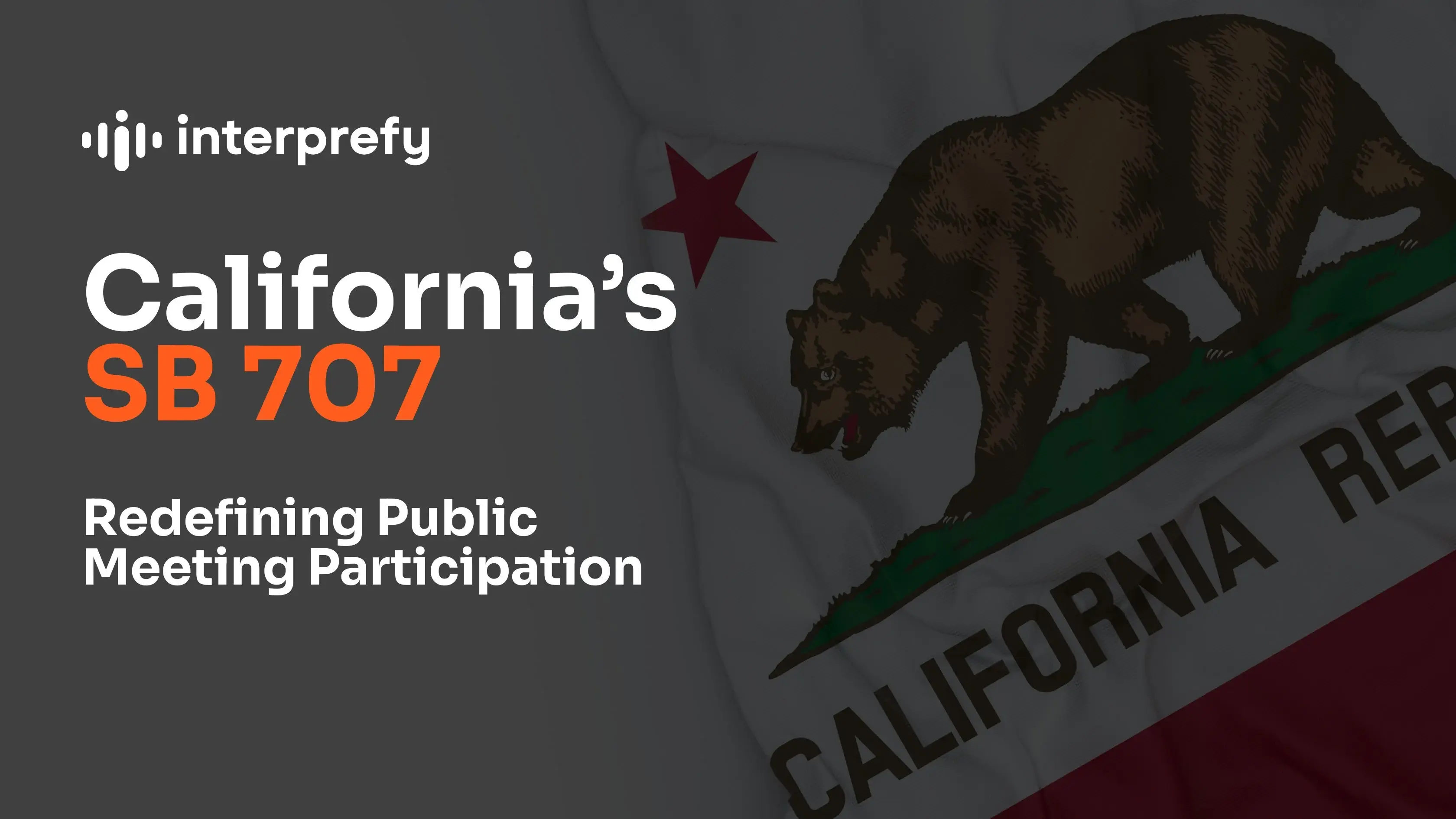
On 3rd October 2025, California Governor Gavin Newsom signed Senate Bill 707 into law. It quietly amended several sections of the Government Code. No fanfare. No viral headlines. But for any organisation involved in delivering, advising on, or participating in California's public meetings, this legislation matters more than most people currently realise.
For more than three decades, the Americans with Disabilities Act has shaped how public life in the United States becomes more accessible. Introduced in 1990, the ADA protects the rights of people with disabilities across employment, transport, public services, and participation in civic life. Title II sits at the heart of this framework. It applies to State and local government entities and requires that qualified individuals with disabilities can access services, programmes, and activities on an equal basis.
Language accessibility has become one of the defining responsibilities of modern organisations. As services, interactions, and experiences continue to shift, expectations for inclusive communication are rising. Regulations such as the European Accessibility Act (EAA), the Americans with Disabilities Act (ADA), and California’s Senate Bill 707 (SB 707) have accelerated this shift by setting clear requirements for accessible communication. Yet compliance alone is not enough. Organisations that treat language accessibility purely as a checklist risk missing the broader opportunity to create experiences that are genuinely usable, human centred, and future ready.
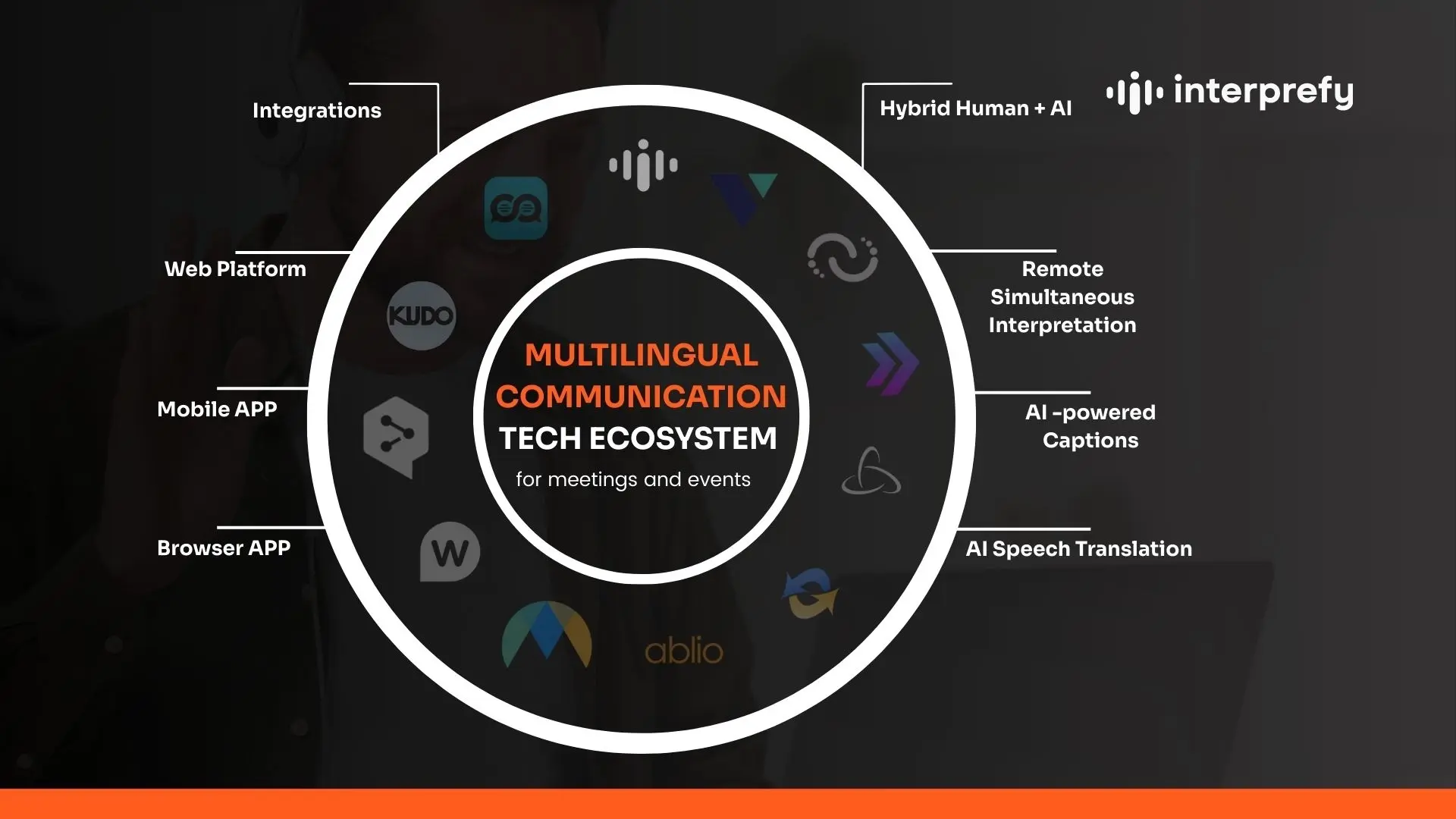
What is the lowest-risk path to scaling multilingual access across your organisation without blowing up security, budget, or user experience?
This question is asked by thousands of leaders every day. The first thing to consider is that global communication has never been more complex. Enterprises and institutions now operate across markets and time zones, manage remote teams and virtual events, and engage audiences who speak dozens of different languages.

Live translation is now a standard expectation for global events, meetings, and broadcasts. In 2026, the challenge for event organisers is no longer whether to provide multilingual access, but how to evaluate and select an approach that is reliable, responsible, and scalable over time.

 Download from the App Store
 Download from Google Play
 More download links